
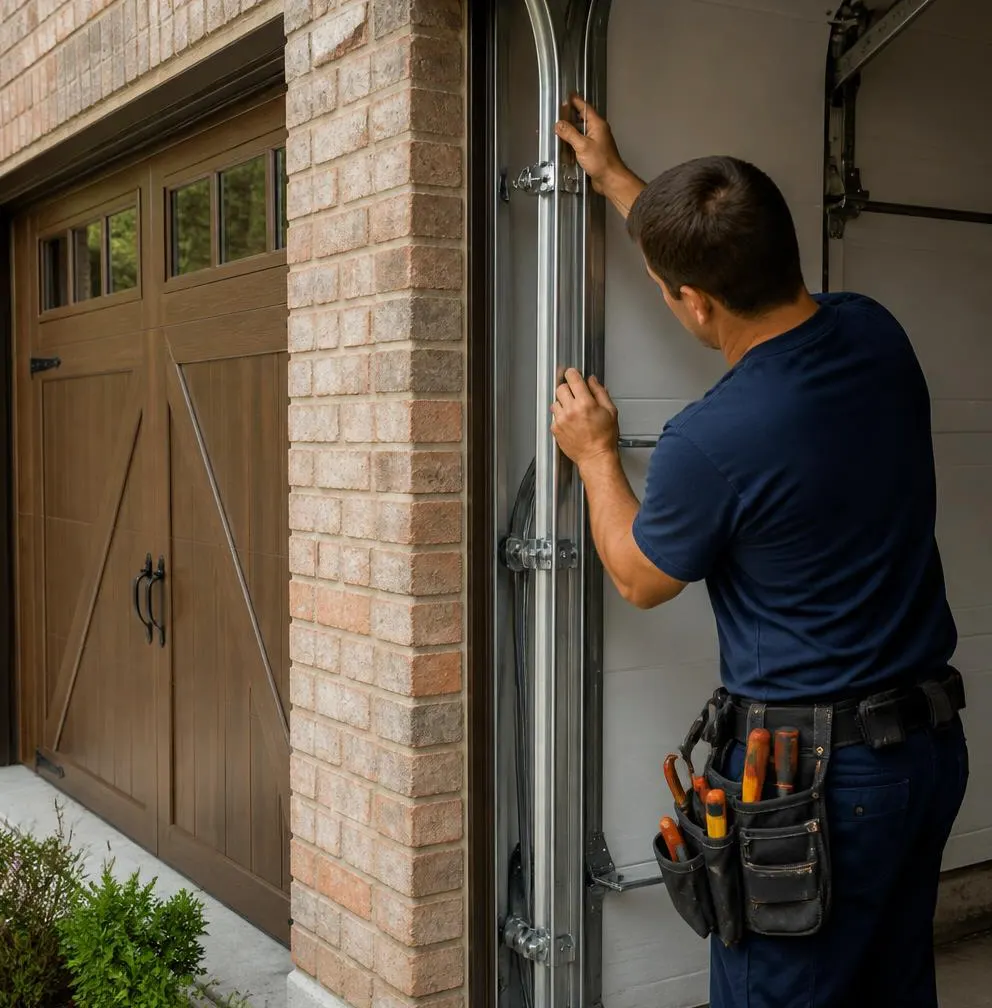
What a technician finds after a windstorm call
After a strong front blows through, a typical service call looks like this: a homeowner says the door 'just folded in the middle' or won't move at all. On arrival, the tech usually finds a track pulled away from the wall, one or two panels bowed inward, rollers popped out of their channels, and weatherstripping torn loose along the bottom or sides. Sometimes the opener trolley has been ripped off the rail because the door tried to lift itself under pressure. None of this is random bad luck. It's what happens when a door built for daily use meets sustained wind pressure it was never braced for.
Why the garage door is a home's weakest wall
Every other wall in a house is a solid, continuous surface. The garage door is a large moving panel held in place by hardware, not structure. When wind hits the front of a home, pressure builds against every surface, but the garage door has the least resistance to it. If it flexes, buckles, or blows in, wind suddenly has a way inside the building envelope. Once that happens, pressure pushes up against the roof from underneath, which is a major factor in roofs failing during severe storms. In short: protect the door, and you're protecting far more than the garage.
This matters more here than in a lot of places. The region sees real spring storm and tornado season, but the big seasonal swings mean wind events aren't limited to spring. Fall cold fronts moving through can produce sudden gusty thunderstorms, and winter brings its own fast-moving wind alongside ice. A door that's been quietly losing hardware integrity all year can fail at any of those points.
What to check before the next front moves through
- Tracks: Look for gaps between the track and the wall bracket, bent sections, or tracks that have pulled loose at the top. A track under stress will flex visibly when the door moves.
- Rollers and hinges: Cracked or worn rollers let the door wobble side to side instead of running straight, which puts uneven stress on the whole panel during wind gusts.
- Panels: Run a hand along the surface for dents, soft spots, or any section that doesn't sit flush with its neighbors. A weak panel is where buckling starts.
- Weatherstripping: Torn or missing seals along the bottom and sides aren't just a draft issue. They're a sign wind can already get a grip on the door's edges.
- Opener and manual release: Confirm the emergency release cord works and that you know how to disengage the opener if power goes out during a storm. If the opener has no battery backup, that's worth adding before storm season, not after an outage.
- Braces and struts: Many doors, especially older or lighter-gauge ones, don't have horizontal reinforcement struts across the back of each panel. These are one of the most effective upgrades against wind load.
How local weather wears on these parts year-round
It helps to think of storm prep as the last stop in a cycle, not a one-time task. Humid summers swell wood doors and can warp panels slightly, which throws off alignment. Cold winters bring ice buildup on tracks and rollers, plus road salt that gets tracked in and accelerates rust on hinges and springs. By the time spring storm season arrives, hardware that's been quietly corroding or loosening all year is exactly what gives out under wind pressure. Checking the door now, heading into winter, catches problems before cold makes metal more brittle and before next year's storm season puts real load on it.
Reinforcement worth considering
If the door is older, lightweight, or has a wide opening, a few upgrades go a long way:
- Retrofit bracing kits that add horizontal struts to existing panels, often a practical middle step before full replacement.
- Wind-rated garage doors, built with heavier gauge steel and reinforced tracks, worth factoring in if a replacement is already on the horizon.
- Upgraded track brackets anchored more securely into the framing, since the original hardware on older installs is sometimes undersized for the door's weight and the opening's exposure.
None of these need to happen all at once. The goal is identifying the weakest link in the system and addressing that first.
When to call Platte City Garage Door Repair
If a recent windstorm has already left the door looking slightly off track, running unevenly, or making a new noise, that's worth a call before the next front comes through rather than after something fails completely. Our Cable & Track Repair service handles bent tracks, loose brackets, and worn rollers before they turn into a door that comes off its rails mid-storm. For homeowners who haven't had the door looked at in a while, our Garage Door Maintenance visit covers hardware, hinges, weatherstripping, and opener function in one pass, which is the most efficient way to catch wind-related weak points before storm season tests them. If the door itself is old, dented, or clearly undersized for the openings and gusts this area sees, we'll walk through replacement options, including sturdier, better-braced doors built for the swings between humid summers and windy winters.
If you're in Platte City, Parkville, Weston, Smithville, Leavenworth, Riverside, Weatherby Lake, or Camden Point and want your garage door checked before the next storm front rolls through, call Platte City Garage Door Repair. We'll inspect the hardware, fix what's loose, and tell you straight whether repair or reinforcement is the right call for your door.