
The Short Answer
Getting a garage door ready for winter in Platte City means four things: replace worn weatherstripping, lubricate the moving parts with a cold-weather grease, check the door's balance, and inspect the springs and cables for wear before the temperature drops and stays there. Do this in October or early November, before the first hard freeze, and you'll avoid most of the breakdowns that show up on the coldest mornings of the year.
Why Winter Is Hard on Garage Doors Here
Platte City sees the kind of seasonal swing that's rough on mechanical systems. Summers are humid, which lets moisture work into metal parts, and then winter brings genuine cold, ice, and road salt tracked in on tires and boots. That combination of moisture followed by freezing temperatures is what causes rust on springs and tracks, stiff rollers, and torsion springs that lose a little tension every time the metal contracts in the cold. A door that worked fine in September can start sticking, groaning, or refusing to close all the way by December if nothing was done to prepare it.
Cold also makes garage door openers work harder. The torque needed to lift a door increases as lubricant thickens and metal contracts, which is why so many opener motors burn out or trip their breakers in January rather than June.
Weatherstripping: Your First Line of Defense
Check the rubber seal along the bottom of the door and the vinyl strips along the sides and top of the frame. If you can see daylight, feel a draft, or the rubber is cracked and flattened, replace it now. A failed bottom seal lets in cold air, moisture, and small animals looking for shelter, and it lets melting snow or ice pool right at the base of the door where it can refreeze and jam the panel to the floor.
- Bottom seal (astragal): replace if cracked, torn, or no longer flexible when cold
- Side and top weatherstripping: look for gaps where it's pulled away from the frame
- Threshold seal: an added strip at the floor helps block wind-driven snow and slush on exposed garages
Lubrication That Actually Holds Up in the Cold
Standard household oil or WD-40 isn't built for sustained cold. It thins out, drips off, and leaves moving parts dry right when they need protection most. Use a silicone-based or lithium-based garage door lubricant rated for low temperatures, and apply it to:
- Hinges and rollers (not the tracks themselves — tracks should stay clean and dry, not greased)
- The torsion spring, lightly
- The opener's chain or screw drive, per the manufacturer's instructions
- Lock mechanisms, if your door has a manual lock, to keep them from freezing shut
Wipe away old, gummed-up grease first. Built-up grime mixed with cold actually makes parts stiffer, not smoother.
Check the Balance Before You Need It To Work
A door that's out of balance puts extra strain on the opener and the springs, and cold weather tends to expose that strain fast. With the opener disconnected (pull the red release cord), lift the door halfway by hand. It should stay in place on its own. If it drifts down or shoots up, the spring tension is off, and that's a job for a professional — torsion springs are under enough force to cause serious injury if handled without the right tools.
Inspect Cables, Springs, and Hardware
Walk around the door and look for:
- Fraying or rust on the lift cables
- Gaps or separation in the torsion spring coils
- Loose bolts on the hinges, tracks, or roller brackets
- Rust forming where road salt residue has collected, especially near the bottom bracket
Any of these left unaddressed tend to fail suddenly rather than gradually once sustained cold sets in, because metal becomes more brittle at low temperatures.
Don't Forget the Opener
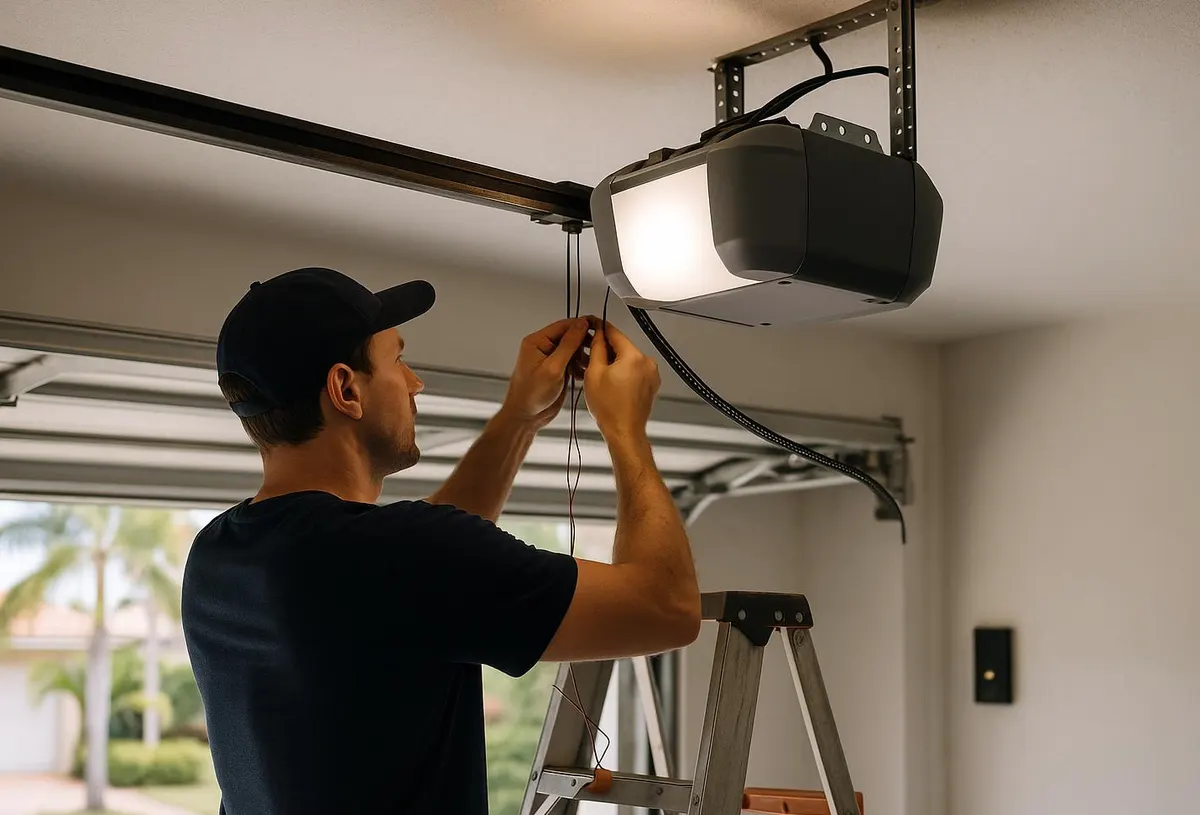
Garage door openers rely on batteries for backup power and remote function, and cold weather drains batteries faster. Replace the backup battery if it's more than a couple of years old, and test the safety reversal sensors by placing an object in the door's path and making sure it stops and reverses. Sensors mounted low near the floor can also get knocked out of alignment by snow shoveling or salt buildup, which causes the door to refuse to close even when nothing is actually blocking it.
Consider Insulation If You Haven't Already
If your garage is attached to the house, or you use it as a workshop through the winter, an insulated door (or an insulation kit added to an existing panel door) makes a real difference in comfort and in how hard the opener has to work against temperature swings. It's not a requirement for the door to function, but it's worth weighing against the cost of a new installation if your current door is older and uninsulated.
When to Call Platte City Garage Door Repair
If your door is sagging, won't stay balanced, or the springs look rusted or stretched, that's not a DIY fix — it's a job for our Spring Replacement service, done with the right tension tools and safety equipment. If the opener is straining, grinding, or tripping the breaker as it gets colder, our Opener Installation & Repair technicians can diagnose whether it's a worn motor, a cold-weakened battery, or a sensor alignment issue before it leaves you locked out on a freezing morning. We serve Platte City, Parkville, Weston, Smithville, Leavenworth, Riverside, Weatherby Lake, and Camden Point, and we show up on time with the parts most winter repairs actually need.
Don't wait for the first ice storm to find out your door isn't ready. Call Platte City Garage Door Repair today to get your garage door inspected and winterized before the cold sets in for good.